A facility can record very few personal injuries and still carry a serious process-safety risk. The difference lies in the type of event being prevented.
Occupational safety often focuses on incidents that affect individuals directly: slips, falls, manual handling, or exposure during routine work. Process safety focuses on the loss of containment of hazardous energy or material, events that may escalate into fire, explosion, toxic release, environmental damage, or major interruption to operations.
Low frequency does not mean low consequence.
Major process incidents are not expected to occur every day. Their relative rarity can create a false sense of security, especially when routine performance appears stable. Yet the consequence of a single failure may extend beyond one task, one person, or one operating unit.
That is why process-safety decisions cannot depend only on recent incident statistics. They also require an understanding of hazardous materials, operating conditions, equipment integrity, human interaction, control systems, and credible failure scenarios.
- What can go wrong under normal, abnormal, or start-up conditions?
- What prevents the scenario from developing or escalating?
- How do we know those safeguards remain effective?
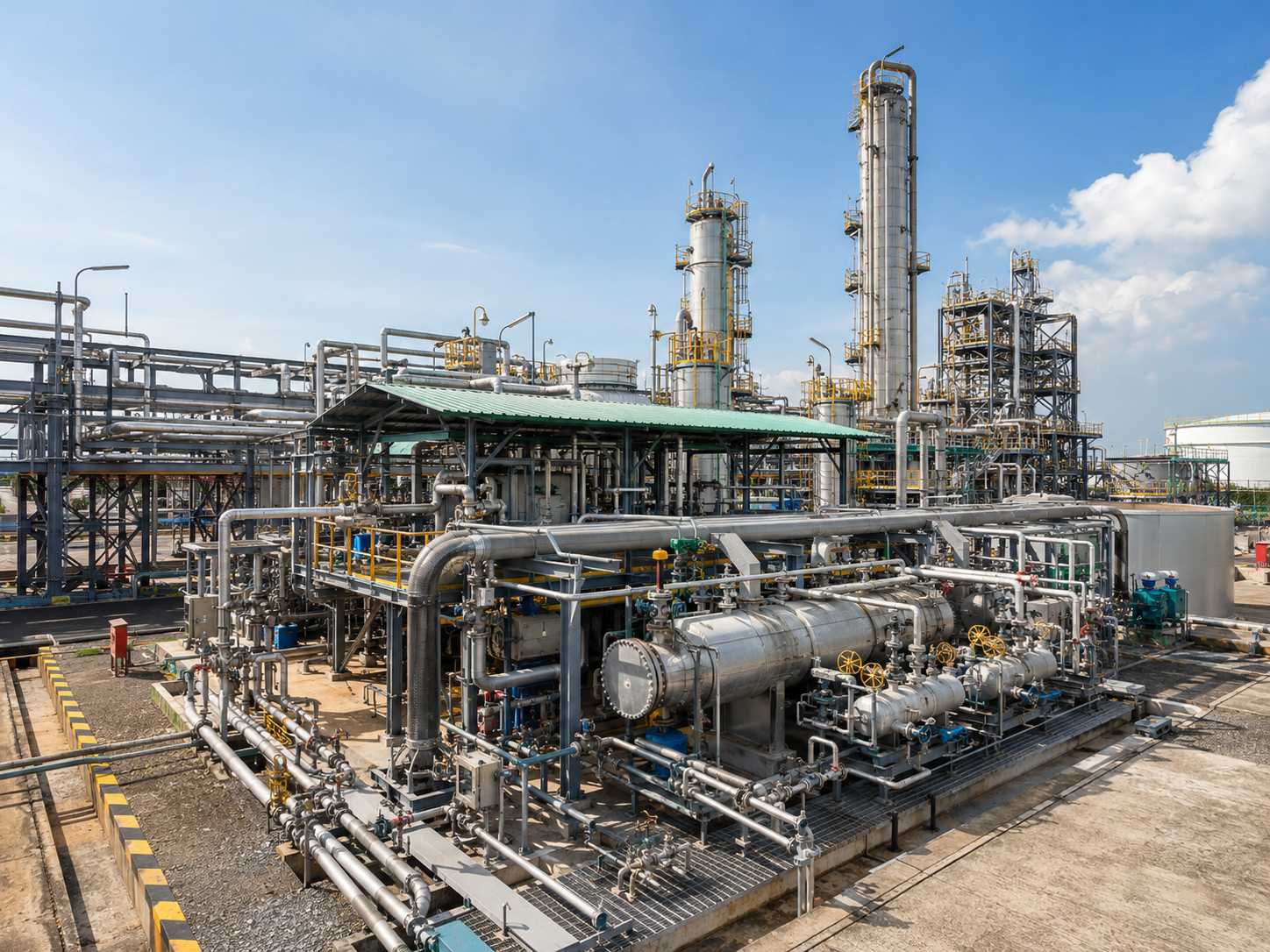
Risk is managed through layers, not one perfect safeguard.
A robust process-safety approach does not assume that equipment will never fail or that people will never make mistakes. Instead, it uses multiple layers of prevention and mitigation. These may include inherently safer design choices, alarms, trips, operating procedures, inspection, emergency systems, and competent response.
Each barrier has a purpose, a performance requirement, and a way it can degrade. A safeguard that exists in a drawing but is bypassed, poorly maintained, misunderstood, or unable to respond to the actual scenario cannot provide the protection assumed during analysis.
Process safety is strengthened when safeguards are not merely listed, but understood, owned, maintained, and verified.
Different questions require different study methods.
Structured studies help teams examine hazards from complementary angles. HAZID can support early hazard identification. HAZOP examines deviations from design intent. LOPA considers scenario risk and the contribution of independent protection layers. SIL work addresses safety-instrumented functions, while QRA and FERA can support the understanding of broader risk and fire or explosion consequences.
The value of these methods does not come from producing documents alone. It comes from asking the right questions at the right project or operating stage, involving people who understand the facility, and translating findings into decisions that can be implemented and followed through.
No single study represents the complete process-safety system. The methods work best when connected to design, operation, maintenance, competency, and management of change.
Process safety continues after the study meeting ends.
Hazards evolve as facilities are designed, constructed, commissioned, operated, modified, and eventually decommissioned. A recommendation that is valid during design may need verification before start-up. A safeguard that performs correctly today may degrade over time. A modification that appears small may introduce a new interaction elsewhere in the process.
This makes process safety a continuing management discipline. Pre Start-Up Safety Review, process-safety audits, incident investigation, site surveys, engineering tasks, and management-system activities each provide a different opportunity to confirm that risk remains understood and controlled.
- 01Understand
Identify hazards, scenarios, and potential consequences.
- 02Control
Select appropriate prevention and mitigation measures.
- 03Verify
Confirm that safeguards and actions work as intended.
- 04Learn
Use audits, investigations, and operational feedback to improve.
Structured thinking turns hazard awareness into action.
Effective process safety is neither a single software output nor a one-time workshop. It is a structured way of understanding major hazards, testing assumptions, assigning responsibility, and maintaining the controls that protect people, assets, operations, and the surrounding environment.
For organizations operating in Oil & Gas, petrochemical, energy, and other process industries, the central question remains consistent: are the hazards understood well enough, and are the safeguards reliable enough, to support safe operation throughout the facility lifecycle?